
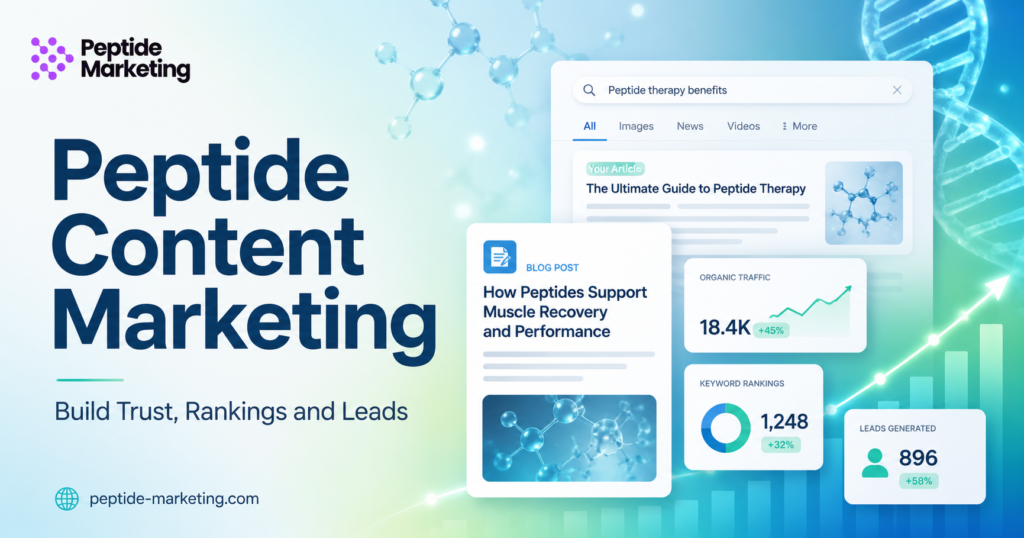
Peptide content marketing is the process of creating useful blogs, guides, videos, emails and social media content that help peptide companies educate their audiences, improve search visibility and generate qualified leads.
It is not simply about publishing more articles. Effective content should answer real questions, support relevant products or services and guide visitors toward a clear next step.
For peptide companies, this matters because potential customers often need more information before they purchase, inquire or trust a new business.
This guide explains how peptide content marketing supports SEO, credibility and long term growth.
For a complete overview of the industry, read What Is Peptide Marketing?.
What Is Peptide Content Marketing?
Peptide content marketing uses educational and commercially relevant content to attract the right audience.
Content may include:
- Blog articles
- Product guides
- Frequently asked questions
- Comparison pages
- Case studies
- Email newsletters
- Social media posts
- Short educational videos
- Downloadable checklists
- Website landing pages
Each piece of content should have a specific purpose.
An educational article may answer an early question. A case study may help a potential client evaluate a service. A product guide may provide information needed before a purchase.
The best content connects the visitor’s question with a useful next step.
Why Peptide Companies Need Educational Content
Peptide related products and services often involve technical language, quality information and specialized customer expectations.
Visitors may want to understand:
- What the company provides
- Who its products or services are for
- How quality is communicated
- What makes the business different
- Which option is most relevant
- What they should do next
When a website does not answer these questions, visitors may leave and continue searching elsewhere.
Educational content reduces uncertainty by helping people understand the company before they contact or purchase from it.
It can also support website credibility. Our guide to the 10 Trust Signals Every Peptide Website Needs explains how helpful content, clear information and transparency work together to build confidence.
How Content Supports Peptide SEO
Peptide SEO helps a website appear when potential customers search for relevant information, products or professional services.
Content supports SEO by targeting searches that cannot be answered fully by a homepage or product page.
For example:
- “What is peptide marketing?” requires an educational guide.
- “Peptide SEO services” should lead to a commercial service page.
- “Why peptide websites fail to convert” requires a problem focused article.
- “Peptide website development” should lead to a website service page.
A strong strategy separates these search intentions rather than forcing one page to rank for every phrase.
Read Why Peptide SEO Is Different From Traditional SEO to understand how search intent, technical terminology and trust affect peptide related rankings.
Content Types That Work for Peptide Businesses
Different content formats support different stages of the customer journey.
Educational blogs
Blogs answer questions, build topical authority and create opportunities for internal linking.
Useful topics may include:
- Industry terminology
- Website and marketing advice
- Product education
- Testing and quality explanations
- Common customer questions
- Business growth challenges
Product and service guides
These pages help visitors understand what the company offers and whether it matches their needs.
Professional Peptide Website Design and Development should make educational information easy to find without overwhelming the user.
Case studies
Case studies provide evidence of real experience.
A useful case study should explain:
- The original challenge
- What was changed
- The timeframe
- The outcome
- What was learned
Social media content
Social Media Marketing helps distribute blog content, build familiarity and bring interested visitors back to the website.
One article can become:
- An Instagram carousel
- A Facebook post
- A LinkedIn post
- A short video
- Several question and answer posts
Email content
Email Marketing for Peptide Brands allows companies to continue communicating with visitors who are not ready to act immediately.
A blog reader might join an email list, receive a helpful guide and later return to request a service or make a purchase.
Articles can continue generating value after publication when they are shared through targeted email sequences. Learn how Peptide Email Marketing connects educational content with lead nurturing.
Match Every Article With Search Intent
Before creating content, decide what the reader is trying to accomplish.
Search intent generally falls into four categories:
Educational intent
The visitor wants information.
Example:
“What is peptide marketing?”
Problem aware intent
The visitor understands a problem and wants possible solutions.
Example:
“Why is my peptide website not converting?”
Commercial investigation
The visitor is comparing strategies, services or providers.
Example:
“Peptide content marketing agency”
Transactional intent
The visitor is ready to take action.
Example:
“Book a peptide website audit”
The article, call to action and internal links should match that intention.
Our guide on How to Market a Peptide Company explains how these different channels can work together as one connected system.
Connect Blogs With Commercial Pages
A blog should not become an isolated destination.
Every article should link naturally to a relevant product, service or related guide.
For example:
- SEO articles should link to your SEO service.
- Website trust articles should link to website development.
- Conversion articles should link to Conversion Rate Optimization.
- Social media articles should link to social media marketing.
- Email articles should link to email marketing.
This helps visitors continue their journey and gives search engines a clearer understanding of your website structure.
It also helps prevent a common problem where blogs receive traffic but generate no leads.
Read Why Most Peptide Websites Fail to Convert Visitors to understand why traffic alone is not enough.
How Content Supports GEO and AEO
Generative engine optimization and answer engine optimization focus on making content easy to understand and useful within AI powered search experiences.
Peptide companies can support GEO and AEO by:
- Answering the main question near the beginning
- Using clear headings
- Defining important terms
- Writing concise explanations
- Including useful examples
- Linking related topics
- Showing who created or reviewed the content
- Keeping company information consistent
- Updating outdated articles
Content should still be written for people first.
Clear structure helps search engines and AI systems understand the page, but useful information is what makes the page worth referencing.
Common Peptide Content Marketing Mistakes
Avoid these common problems:
- Publishing without keyword research
- Writing only promotional content
- Creating articles with no clear audience
- Repeating the same topic across several pages
- Ignoring internal links
- Using weak or missing calls to action
- Publishing generic content with no original value
- Measuring traffic without measuring leads
- Failing to update older articles
A smaller number of useful, connected articles is more valuable than a large collection of weak posts.
How to Measure Content Performance
Do not measure content only by page views.
Track:
- Organic impressions
- Search clicks
- Rankings for relevant keywords
- Service page visits
- CTA clicks
- Email signups
- Contact form submissions
- Discovery call bookings
- Qualified leads
- Revenue influenced by content
The best article is not always the one with the highest traffic. It is often the article that attracts the right audience and moves them closer to action.
Frequently Asked Questions
What is peptide content marketing?
Peptide content marketing is the creation and distribution of useful content that educates peptide audiences, improves search visibility and supports lead generation.
Does content marketing help Peptide SEO?
Yes. Content can target relevant educational and commercial searches, build topical authority and support important product and service pages through internal linking.
What should a peptide company publish?
Useful formats include educational blogs, product guides, FAQs, case studies, comparison pages, social media posts, videos and email newsletters.
How often should a peptide company publish?
Consistency matters more than volume. One strong article each week or every two weeks can be effective when each article targets a clear topic and supports the wider website strategy.
Can content marketing generate qualified leads?
Yes. Content can generate leads when it targets the right audience, answers meaningful questions and includes a relevant conversion path.
Build a Stronger Peptide Content Strategy
Peptide content marketing should educate people, improve search visibility and support business growth.
Every article should answer a real question, connect to relevant services and help visitors take the next logical step.
Peptide-Marketing helps peptide companies create connected strategies across SEO, content, websites, social media, email and conversion optimization.
Need Better Content Opportunities?
Peptide-Marketing can review your existing website, keywords and content gaps to identify topics that could attract more relevant traffic and qualified leads.
Book Your Free 30 Minute Peptide Content Strategy Call